
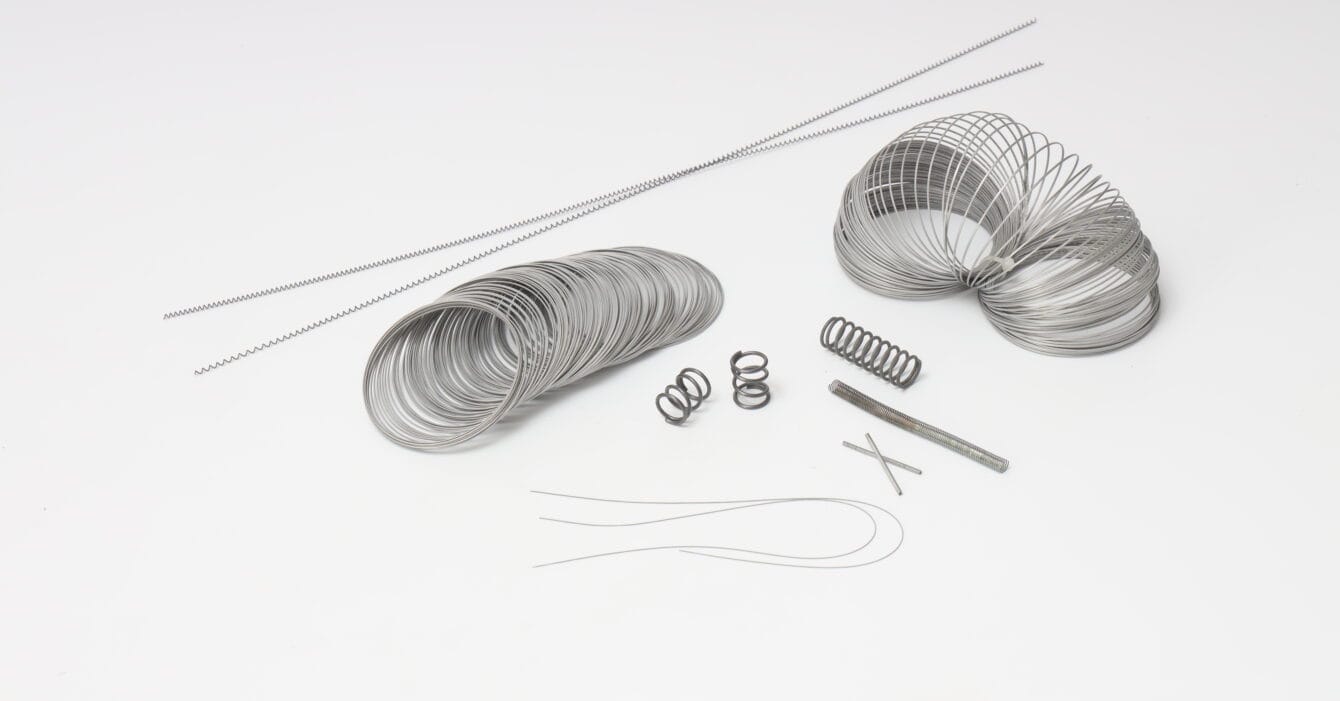
Nitinol is a nickel-titanium alloy famous for shape memory and superelasticity. Many industries use nitinol because it can return to its original shape after bending or heating.
Today, nickel-titanium materials are widely used in medical technology, robotics, aerospace systems, and precision engineering.
Medical Applications of Nickel-Titanium
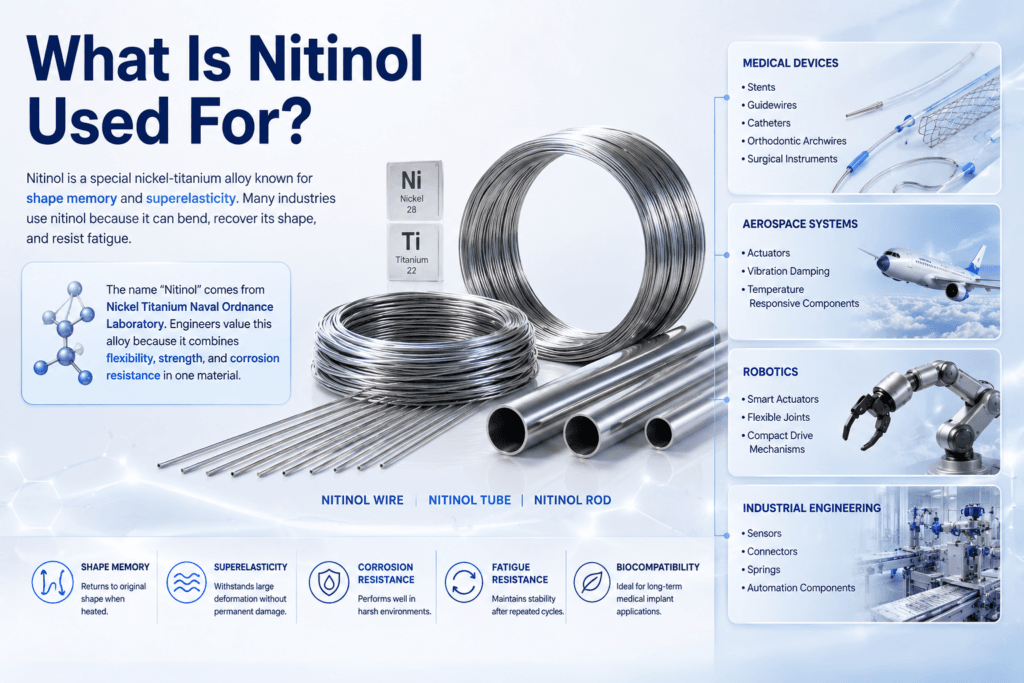
Medical devices are one of the most important uses of nickel-titanium. Its flexibility and biocompatibility help doctors perform minimally invasive procedures more safely.
Common Medical Uses
- Guidewires
- Vascular stents
- Orthodontic archwires
- Stone retrieval baskets
- Catheter reinforcement components
Superelastic NiTI wire can bend repeatedly without permanent deformation. Therefore, it improves both flexibility and durability in medical instruments.
Industrial and Robotics Applications
Many engineers also use nickel-titanium in smart actuators and automated systems. Shape memory performance allows nickel-titanium components to react to temperature changes and create controlled movement.
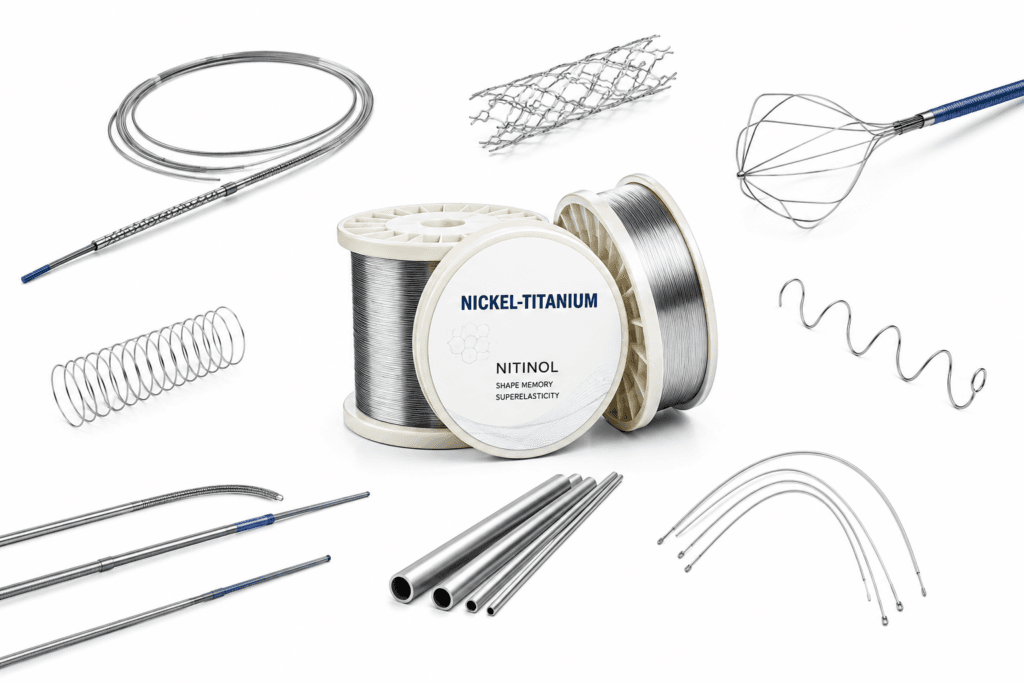
Common industrial applications include:
- Micro actuators
- Smart switches
- Flexible connectors
- Robotics components
Why Is Nitinol Important?
Nickel-titanium combines several valuable properties in one alloy:
- Shape memory effect
- Superelasticity
- Corrosion resistance
- Fatigue resistance
- Long service life
Because of these advantages, nitinol continues to support advanced medical and industrial technologies.